
Hydrovac Truck Parts: Every Component Explained Simply
By Nick Zimmerman, certified diesel mechanic with 25+ years on hydrovac and vacuum trucks
Quick Answer: The main hydrovac truck components are: the diesel engine (typically Cummins 300-500 HP), high-pressure water pump (2,000-3,000 PSI), positive displacement blower (3,000-6,000 CFM), debris tank (4-15 cubic yards), water tank (400-1,500 gallons), hydraulic boom (8-26 ft reach), and control systems. The blower and water pump are the most common failure points.
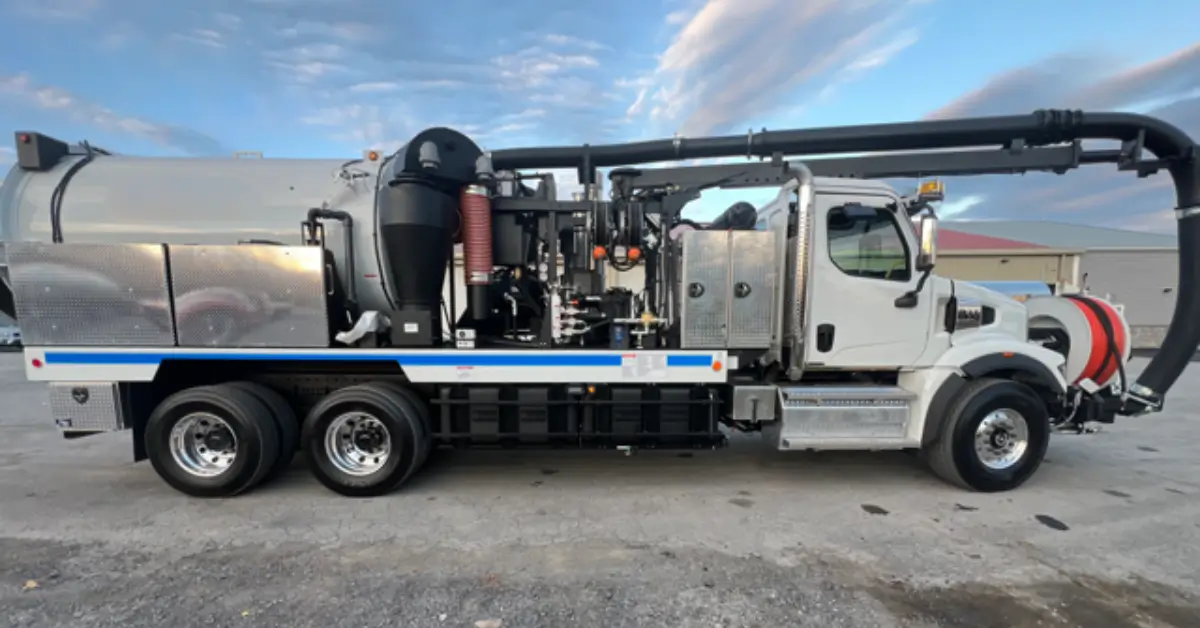
Need to buy one of these parts? We source OEM and aftermarket hydrovac parts — blowers, water pumps, door gaskets, boom hydraulics, hoses, nozzles and more — for Vactor, Vac-Con, GapVax and every major brand, shipped to you or installed on-site. Request a hydrovac parts quote →
Hydrovac Truck Parts and Components
A hydrovac truck combines a heavy-duty diesel chassis with specialized excavation equipment — water systems, vacuum systems, hydraulics, and debris storage all working together.
Understanding these components helps operators spot problems early, helps fleet managers make maintenance decisions, and helps anyone buying or operating hydrovac equipment know what they're working with.
When any major component fails, excavation stops. The truck either gets repaired on site or towed to a shop. Either way, downtime costs money. Knowing what each part does — and what warning signs to watch for — prevents small problems from becoming expensive breakdowns.
For an overview of what hydrovac trucks are and how they work, see our complete guides. Different manufacturers use different component configurations, which affects pricing and maintenance needs.
The Chassis and Cab
The chassis is the truck platform that carries all hydrovac equipment. Most hydrovac trucks use Class 8 commercial chassis from major manufacturers.
Common Chassis Manufacturers
- Peterbilt and Kenworth (both PACCAR brands) are popular choices for hydrovac builds. They offer heavy-duty frames designed for vocational applications.
- Freightliner chassis appear frequently in hydrovac fleets. The Freightliner 114SD and 122SD models handle heavy payloads well.
- Mack and Volvo (same parent company) provide robust chassis options. Mack Granite models are common in vacuum truck applications.
- International (Navistar) chassis serve many hydrovac applications, particularly in municipal and utility fleets.
CDL Requirements
Operating a hydrovac truck requires a Commercial Driver's License (CDL). Most hydrovac trucks exceed 26,000 pounds gross vehicle weight, triggering Class A or Class B CDL requirements.
Some configurations also require tank vehicle (N) or hazmat (H) endorsements depending on the materials being transported. For complete licensing details, see our operator requirements guide.
Standard Truck Components
The chassis includes all standard heavy truck systems:
- Brakes — Air brake systems with drum or disc brakes. Loaded hydrovac trucks weigh 50,000 to 80,000 pounds and need serious stopping power.
- Steering — Power steering systems handle the heavy front axle loads.
- Suspension — Heavy-duty leaf springs or air ride suspensions support equipment weight and debris loads.
- Axles — Front steer axles typically rate at 12,000 to 20,000 pounds. Rear drive axles (often tandem) rate at 40,000 to 46,000 pounds combined.
Weight Considerations
Loaded debris tanks add significant weight. A 12-cubic-yard tank full of wet soil adds approximately 25,000 to 30,000 pounds to the truck.
Road weight limits vary by state and road classification. Operators must know when tanks are approaching weight limits to avoid overweight violations and road damage.
The Diesel Engine
The diesel engine powers everything on a hydrovac truck — both driving the vehicle and running all excavation equipment.
Why Engine Choice Matters
The engine must produce enough horsepower to drive a fully loaded truck while simultaneously running high-pressure water pumps, vacuum blowers, and hydraulic systems.
Underpowered engines bog down during heavy excavation. They can't maintain adequate RPM to power auxiliary systems under load. This slows work and increases fuel consumption.
Common Engine Manufacturers
- Cummins engines power many hydrovac trucks. The ISL, ISX, and X15 models offer 300 to 500+ horsepower depending on configuration.
- Caterpillar (CAT) engines, though no longer in new on-highway production, remain common in existing fleets. CAT C13 and C15 engines still operate in thousands of trucks.
- Detroit Diesel (Daimler) engines serve Freightliner chassis and others. The DD13 and DD15 models provide reliable power.
- PACCAR engines (MX-11 and MX-13) come standard in Peterbilt and Kenworth chassis.
The PTO Connection
The Power Take-Off (PTO) transfers engine power to auxiliary equipment. It connects to the transmission and drives hydraulic pumps that power the water system, vacuum blower, and boom.
When the operator engages the PTO, engine RPM increases to provide adequate power for excavation systems. A PTO failure disables all excavation functions even though the engine runs fine.
Why Engine Reliability Is Critical
Every system depends on the engine. If it fails, the truck can't drive, the water pump stops, the vacuum blower shuts down, and the boom won't move. Nothing works without the engine.
For diesel engine diagnostics and repair, experienced technicians understand both the engine itself and how it integrates with hydrovac auxiliary systems.
Water System Components
The water system stores, pressurizes, heats, and delivers water to the excavation site through a handheld wand.
Water Tank
The water tank holds fresh water for excavation. Capacity ranges from 300 gallons on compact units to 1,500 gallons on full-size trucks.
- Materials — Most tanks use aluminum or stainless steel for corrosion resistance. Some use polyethylene for lighter weight.
- Insulation — Cold-climate trucks have insulated tanks to prevent freezing. Some include heating elements to maintain water temperature overnight.
- Fill connections — Standard fire hose fittings allow quick refilling from hydrants or water trucks.
Water Pump
The water pump pressurizes water and pushes it through the delivery system. This is a critical component — pump failure stops all excavation.
- Pressure output — Most pumps produce 2,000 to 3,000 PSI. Heavy-duty units reach 4,000 PSI or higher.
- Flow rate — Measured in gallons per minute (GPM). Typical flow rates range from 5 to 10 GPM at full pressure.
- Drive method — Pumps connect to the engine through the PTO-driven hydraulic system or run on dedicated auxiliary engines.
- Common pump types — Plunger pumps and piston pumps handle the high pressures required. They require regular maintenance including seal replacement and valve service.
Water Heater and Boiler
Heated water systems enable frozen ground excavation. Cold water bounces off frozen soil — hot water melts frost while cutting.
- Inline heaters warm water as it flows from tank to wand. They're simpler but produce lower temperatures.
- Boiler systems pre-heat water in the tank. They produce higher temperatures (180°F+) but add weight, complexity, and fuel consumption.
- Fuel source — Most heaters burn diesel fuel from the truck's tank or a dedicated fuel supply.
Hoses and Fittings
High-pressure hoses connect the pump to the wand. These hoses must withstand continuous pressure cycling and resist abrasion.
- Pressure rating — Hoses are rated for working pressure plus a safety margin. A 3,000 PSI system uses hoses rated for 6,000 PSI or higher.
- Fittings — Quick-connect fittings allow fast wand changes. O-rings and seals require periodic replacement.
- Common failures — Hoses wear from flexing and abrasion. Fittings leak when seals deteriorate. Regular inspection catches problems before ruptures occur.
Wand and Lance
The wand (or lance) is the handheld tool operators use to direct water at the dig site.
- Length — Typical wands measure 4 to 6 feet. Longer wands reach deeper excavations without operators entering the hole.
- Construction — Stainless steel or aluminum tubes with insulated grips. Trigger valves or ball valves control water flow.
- Connections — Quick-connect fittings attach the wand to the supply hose and allow nozzle changes.
Nozzles
Nozzles attach to the wand tip and shape the water stream. Different nozzles suit different conditions.
- Pencil jet — Tight, focused stream for cutting hard clay and compacted soil.
- Fan spray — Wider pattern covers more area. Better for loose soil and general excavation.
- Rotating nozzle — Spins to combine cutting power with area coverage. Popular for general-purpose work.
Nozzles wear from abrasive particles in the water and soil contact. Worn nozzles lose cutting efficiency and waste water.
Vacuum System Components
The vacuum system creates suction, moves debris from the excavation site, and delivers it to the debris tank.
Positive Displacement Blower
The positive displacement (PD) blower is the heart of the vacuum system. It moves large volumes of air to create suction.
- How it works — Rotating lobes trap air and push it through the system. As air exits one side, low pressure forms on the intake side. That low pressure is the suction.
- Capacity — Measured in CFM (cubic feet per minute). Typical blowers move 3,000 to 6,000 CFM. Larger blowers move more material faster but require more engine power.
- Common issues — Bearing wear, lobe contact, belt failures, and seal leaks all affect blower performance. Unusual noise or vibration indicates problems developing.
For pump, blower, and boom repair, technicians with vacuum system experience diagnose and fix these issues quickly.
Vacuum Hose
The vacuum hose carries debris from the dig site to the tank.
- Diameter — Most hoses measure 6 to 8 inches. Larger diameter handles bigger debris pieces and higher flow volumes.
- Material — Reinforced rubber or polyurethane resists abrasion from rocks and debris. Even tough materials wear out over time.
- Length — Longer hoses reduce effective suction due to friction. Most operations keep hose runs under 30 feet.
Boom Assembly
The boom holds and positions the vacuum hose, extending from the truck to reach the dig location.
- Reach — Most booms extend 10 to 25 feet from the truck.
- Rotation — Booms rotate 270 to 360 degrees to cover the working area from one truck position.
- Construction — Steel tube construction with wear-resistant linings where debris passes through.
Boom Rotation Motor
The rotation motor spins the boom left and right. Most use hydraulic motors that provide smooth, controlled movement.
Common failures — Seal leaks, shaft wear, and internal damage affect rotation. Jerky movement or inability to hold position indicates rotation motor problems.
Boom Lift Cylinders
Hydraulic cylinders raise and lower the boom. They position the vacuum hose at the correct height for each excavation.
Common failures — Cylinder seals leak over time. Rods get scratched from debris contact. Slow or jerky movement indicates cylinder problems.
Filtration System
Filters protect the blower from debris that shouldn't enter it. Rocks, sticks, and large debris get caught before reaching the blower.
- Cyclonic separators use centrifugal force to remove heavy particles from the airstream.
- Screen filters catch debris that passes the cyclone.
- Maintenance — Clogged filters reduce suction and strain the blower. Regular cleaning maintains performance.
The Debris Tank
The debris tank stores excavated material until the truck dumps it at an approved disposal site.
Tank Body
- Construction — Heavy-gauge steel handles abrasive slurry and resists corrosion. Interior coatings protect against rust and chemical attack.
- Capacity — Ranges from 6 cubic yards on small units to 15+ cubic yards on large trucks. Full tanks weigh 25,000 to 35,000 pounds depending on material density.
- Shape — Cylindrical or rectangular designs each have advantages. Cylindrical tanks handle vacuum pressure better. Rectangular tanks may dump more completely.
Dump Door and Tailgate
- Rear door — Opens to release debris. May be hinged at top (dumps during tilt) or bottom (gravity flow).
- Seals — Rubber gaskets seal the door during operation and transport. Worn seals leak vacuum and allow debris to escape.
- Latches — Heavy-duty latches secure doors against vacuum pressure and load forces. Failed latches create safety hazards.
Tank Tilt System
- Hydraulic tilt — Cylinders raise the front of the tank, angling debris toward the dump door. Tilt angles range from 45 to 70 degrees.
- Full-dump systems — Some tanks tilt nearly vertical for complete emptying. This helps with sticky materials like clay.
- Controls — Operators control tilt from a station at the rear of the truck where they can see the dumping process.
Internal Baffles
- Purpose — Baffles prevent slurry from sloshing during transport. Shifting loads affect truck stability, especially during turns and braking.
- Design — Partial walls inside the tank break up liquid movement. They're designed to allow dumping while controlling transport dynamics.
Sight Glass and Level Indicators
- Sight glass — A window in the tank side shows fill level. Operators check fill progress without opening access ports.
- Electronic indicators — Some trucks have sensors that display fill level on the control panel. Alarms warn when tanks approach capacity.
Pressure Relief Valves
Safety function — Relief valves prevent over-pressurization. If vacuum pressure exceeds safe limits, valves open to release pressure.
Maintenance — Valves must operate freely. Stuck valves can allow dangerous pressure buildup or prevent adequate vacuum.
Hydraulic System
The hydraulic system powers the boom, tank tilt, outriggers, and other moving components throughout the truck.
Hydraulic Pump
The hydraulic pump creates pressure that operates all hydraulic functions. It's driven by the PTO from the main engine.
- Output — Typical pumps produce 2,000 to 3,000 PSI at various flow rates depending on system demands.
- Type — Gear pumps and piston pumps serve different applications. Piston pumps provide higher pressure and better efficiency.
Hydraulic Reservoir
The reservoir stores hydraulic fluid and allows air bubbles to escape. It includes filters, fill ports, and level indicators.
- Fluid type — Specific hydraulic fluids are required for each system. Wrong fluid causes seal damage and component failure.
- Maintenance — Fluid level, condition, and filter cleanliness all require regular attention.
Cylinders and Motors
Hydraulic cylinders provide linear motion (boom lift, tank tilt). Hydraulic motors provide rotary motion (boom rotation).
- Seal wear — Cylinders and motors rely on internal seals. Worn seals leak fluid and lose power.
- Rod damage — Cylinder rods get scratched by debris. Damaged rods destroy seals rapidly.
Hoses and Fittings
Hydraulic hoses connect pumps, valves, cylinders, and motors throughout the truck.
- Common failures — Hoses are the most frequent hydraulic failure point. They wear from flexing, age, heat, and abrasion. Fittings loosen and leak.
- Consequences — A single hydraulic hose failure can disable boom operation, tank dumping, or other critical functions.
Electrical System
The electrical system controls all truck and excavation functions through switches, sensors, and wiring.
Control Panels
- Ground-level controls — Panels mounted on the truck body let operators manage excavation functions from the dig site.
- In-cab controls — Dashboard switches control PTO engagement, outrigger deployment, and system monitoring.
- Functions controlled — Boom movement, water pressure, vacuum on/off, engine throttle, and safety systems.
Wiring Harnesses
- Complexity — Hydrovac trucks have extensive wiring connecting sensors, switches, lights, and control systems throughout the vehicle.
- Environment — Wiring faces water spray, debris, vibration, and temperature extremes. Damage accumulates over time.
- Common failures — Chafed insulation, corroded connectors, and broken wires cause intermittent or complete function loss.
Sensors and Safety Interlocks
- Sensors — Monitor tank level, hydraulic pressure, engine parameters, and other system conditions.
- Interlocks — Prevent dangerous operations. Examples: boom won't operate unless outriggers are deployed; vacuum shuts off if tank pressure exceeds limits.
- Failures — Faulty sensors give wrong readings. Failed interlocks may prevent operation or allow unsafe conditions.
Lighting
- Work lights — Illuminate excavation sites for night operations. LED lights provide bright, efficient illumination.
- Road lights — Standard DOT-required lighting for highway operation.
- Warning lights — Beacons and strobes alert nearby workers and traffic to truck presence.
Hose Reels and Accessories
Water Hose Reel
Power reels store and deploy the high-pressure water hose. They keep hoses organized and protected when not in use.
- Drive — Hydraulic or electric motors power the reel. Manual rewind is backup if power fails.
- Capacity — Typically stores 100 to 300 feet of high-pressure hose.
Vacuum Hose Storage
Large-diameter vacuum hoses store on racks, in tubes, or coiled on the truck body. Proper storage prevents kinks and damage.
Tool Storage
Compartments hold wands, nozzles, fittings, and hand tools. Organized storage keeps equipment accessible and protected.
Wireless Remote Controls
Remote controls let operators manage boom movement from the best vantage point at the dig site.
- Range — Typical range is 50 to 100 feet from the truck receiver.
- Functions — Boom extend/retract, lift/lower, rotate left/right. Some include water and vacuum controls.
- Common issues — Battery failures, signal interference, and receiver problems affect reliability.
Safety Equipment
Emergency Shut-Offs
- E-stop buttons — Immediately shut down engine and all systems. Located at operator stations and sometimes at multiple truck locations.
- Purpose — Allow instant shutdown in emergency situations.
Fire Suppression
Some trucks include fire suppression systems, especially those working in hazardous environments or handling flammable materials.
Ground Fault Protection
Electrical systems may include ground fault protection for operator safety, particularly when working near electrical utilities.
Backup Cameras and Sensors
- Cameras — Show the area behind the truck during backing maneuvers.
- Proximity sensors — Warn operators of obstacles near the truck.
Common Failure Points
Certain components fail more frequently than others. Knowing what to watch helps prevent unexpected breakdowns.
Most Frequent Failures
- Hydraulic hoses — Flexing, heat, and age cause hose failures. Leaks often start small and grow rapidly.
- Vacuum hose wear — Abrasion from debris wears hoses thin. Holes reduce suction and allow debris escape.
- Blower bearings — Continuous high-speed operation wears bearings. Noise and vibration are early warnings.
- Water pump seals — Pressure cycling and abrasion wear pump seals. Leaks indicate replacement is needed.
- Electrical connections — Vibration and corrosion loosen connectors. Intermittent problems often trace to wiring.
- Boom cylinder seals — Debris contact and constant use wear cylinder seals. Slow movement or drift indicates seal problems.
Warning Signs by System
- Engine — Hard starting, power loss, unusual smoke, or abnormal sounds.
- Water system — Pressure drops, pump noise, visible leaks.
- Vacuum system — Reduced suction, blower noise, vibration.
- Hydraulics — Slow boom movement, fluid leaks, jerky operation.
- Electrical — Intermittent controls, warning lights, component failures.
Why Preventive Maintenance Matters
Catching problems early prevents roadside breakdowns. A $50 seal replacement during scheduled service prevents a $5,000 emergency repair plus lost revenue from downtime.
For hydrovac maintenance and inspection programs, scheduled service catches developing problems before they stop work.
Every Part Matters
A hydrovac truck is only as reliable as its weakest component. Engine problems stop everything. Pump failures halt excavation. Even a simple hydraulic hose failure can shut down boom operation.
Understanding what each system does — and what warning signs indicate trouble — helps operators and fleet managers keep trucks productive.
When repairs are needed, technicians who understand both diesel mechanics and vacuum excavation systems diagnose problems faster and fix them correctly the first time.
Need a replacement part for any system on this page? Our hydrovac parts sourcing service identifies the correct component from your truck's make, model and serial, quotes OEM or aftermarket options, and ships it or installs it on-site.
For hydro excavation truck repair and vacuum truck repair, experience with these specialized machines matters. Generic truck mechanics may understand the chassis. But the excavation equipment requires specific knowledge that comes from working on these trucks regularly.
Related Topics
What Is a Hydrovac Truck? Definition, Components & Uses
Learn what hydrovac trucks are, their key components, and why they're essential for safe excavation in modern construction and utility work.
How Hydrovac Trucks Work: The Complete Process Explained
Step-by-step explanation of how hydrovac trucks use water pressure and vacuum suction to safely excavate soil without damaging underground utilities.
Hydrovac vs Traditional Excavation: Which Method Is Better?
Compare hydrovac excavation to backhoes and hand digging. Learn why hydro excavation is safer, faster, and more precise for utility work.